UCLA’s Alan D. Leve Center for Jewish Studies, and the UCLA Labor Center have teamed up with a number of civic and labor organizations on a program entitled “The Past, Present, and Future of Jews and the Labor Movement in Los Angeles.” Seeking to shed a light on what drew Jewish immigrants to the cause of organized labor and how their involvement impacted the movement, UCLA historian Caroline Luce is bringing together historians, activists, rabbis and community leaders for a panel on the often-overlooked but vital role of Jewish labor activists in Los Angeles’ diverse and integral labor movement.
Jewish immigrants, both religious and secular, had deep involvement in the labor movement, most famously in New York, where Judith Weller’s statue representing a Jewish garment worker toiling at a sewing machine is a prominent piece of public art. But while Ellis Island and the sweatshops of Manhattan loom large in American history — and especially in the history of American immigration and the struggle for workers rights — Los Angeles is also a central player in those vital stories.
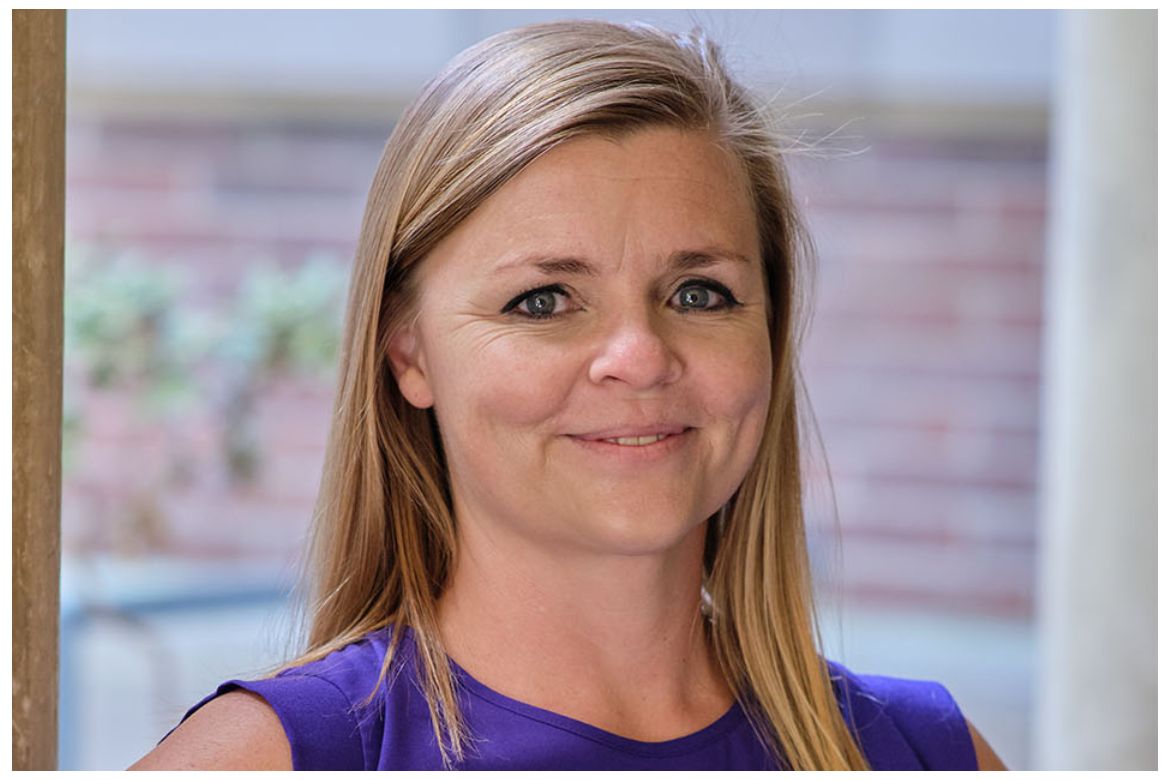
Professor Luce is the project director of the UCLA Institute for Research on Labor and Employment’s Memory Work Research Initiative and a lecturer in the UCLA Department of Labor Studies. Her research explores immigration, labor and working-class culture in the American West served for nearly 10 years as the chief curator of the Mapping Jewish LA project. She spoke to Newsroom about the event.
Tell us about the genesis of this event.
For several years while I was working at the Alan D. Leve Center for Jewish Studies, I participated in the commemorations of Jewish American Heritage Month (which is May) at Los Angeles City Hall. It was always a great opportunity to celebrate Los Angeles’ Jewish history and promote civic engagement with our students and colleagues on campus. I conceived of this event as a similar opportunity and wanted to collaborate with the Jewish Partnership for Los Angeles, as they share similar civic-minded goals. And, based on my own research and academic interests, I thought foregrounding Jews’ relationship to the labor movement and how it has changed over time could open up a broader conversation about their “place” in the past and “presence” in the events that shaped our region, its residents and its future.
You see the Jewish involvement in the labor movement as central both to the history of Jews in Los Angeles and to the history of the labor movement. What makes it such a vital part of both stories?
My teaching, my research and my current position with the Memory Work Research Initiative centers the experiences of workers, many of them immigrants, and the creative and solidaristic ways that they have cultivated their own modes of belonging and, by doing so, expanded the meaning of citizenship for all.
In my own research, I explore the experiences of Ashkenazi Jewish immigrants from Eastern Europe who arrived in Los Angeles around the turn of the 20th century, most of whom found jobs as craftsmen and wage workers in a variety of industries. Many brought with them previous experience in the revolutionary movement against the tsar and with unions in other cities in the U.S. and played vital roles in labor and left-wing organizations here in Southern California and beyond. Some did so through unions with majority-Jewish memberships, like the International Ladies Garment Workers Union, while others played leading roles in workers justice organizations in which Jews comprised a very small portion of the rank and file.
But through their involvement, they helped to improve the wages and working conditions of thousands of people and mitigate the gross economic and racial inequities of their times. Immigrant workers in Los Angeles continue to demonstrate that leadership today in very different times, and recognizing those historical intersections can help us all see our shared interests and mutual responsibilities to one another as Angelenos.
These histories seem to be poorly understood by many. How do you account for that?
Part of the problem is that the largest archives of American Jewish life are housed in New York (and Cincinnati) and part of the problem is that historians across many disciplines and fields have failed to take Los Angeles seriously. But for whatever reason, the Jewish history of Los Angeles, which has the second-largest Jewish population in the United States, continues to be written through paradigms based on the industrial cities of the east. Boyle Heights, for example, which had the highest density of Jewish residents west of Chicago in the 1930s, has been referred to as “Los Angeles Lower East Side” or “Los Angeles Ellis Island.” I have for years now devoted myself to forging new ways of understanding Jewish migration and acculturation in relation to race, class and mobility suited to the particular landscapes of the American West.
Why is it important to understand these histories better? Is this a matter of historical accuracy, contemporary relevance, or both?
This is a tough question to ask a historian! In my current role at the IRLE, we describe our project as Memory Work for two reasons. First, memory does work — we believe engagement with the past can be a powerful source of empowerment and that history is a vital resource for democratic engagement in a multiracial society. We can learn lessons about strategy and tactics from the workers justice movements of the past, to be sure. But I think that cultivating a deeper relationship to the past, a sense of mutuality, responsibility and interconnection across generations, can also be a profound source of solidarity.
We also call our project Memory Work because memory is work. Our projects bring together scholars, practitioners and community memory-keepers to collect oral histories and artifacts and create tools to support community-based memory projects. We strive to forge new, collaborative modes of remembrance grounded in the IRLE’s commitment to advancing the quality education and employment for all. By engaging students and workers in every part of the research process, we hope to empower a new generation of critical memory-keepers in community organizations, unions, schools and colleges. This event aims to do the same with individuals and communities we have thus far left out of our Memory Work.
What are you hoping people take away from the event?
A greater appreciation for the role that working people, and particularly Jewish workers, have played in the making of our multiracial democracy.
How does this event relate to your academic work?
My book, “Yiddish in the Land of Sunshine,” will be released later this year and highlights Jewish labor and left-wing organizing in the years before World War II. I wanted to create this event as an opportunity to explore the same themes in a more contemporary context.